
History of Chess
From ancient battlefields to the modern game
Chess has been around for well over a thousand years. In that time it has traveled across continents, changed its rules more than once, and somehow stayed true to its original spirit. What began as a game meant to represent war eventually became something rarer — a pure contest of minds. Its story is long, but it's also deeply human.
The Origins: Chaturanga in Ancient India
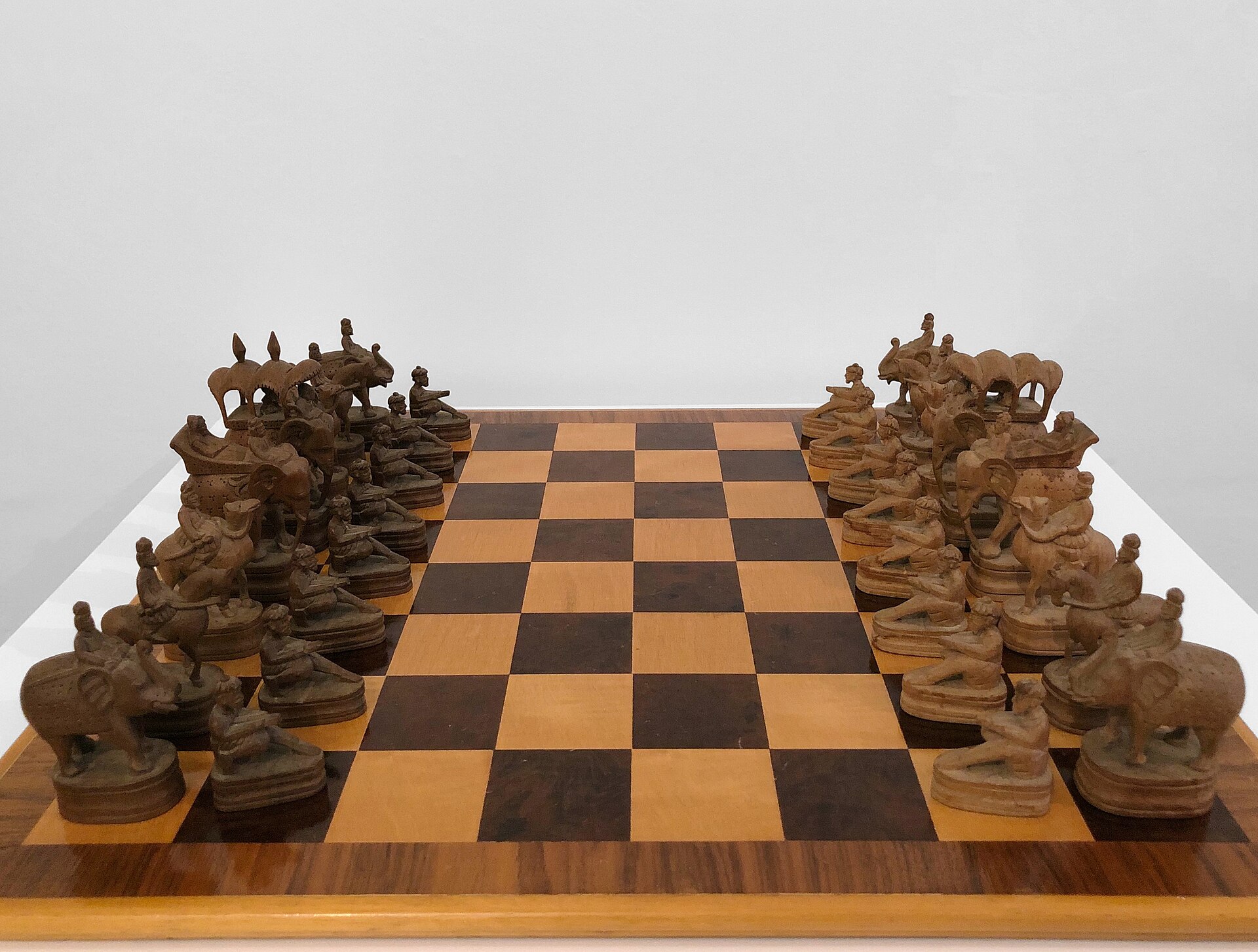
The earliest clear ancestor of chess appeared in northern India during the Gupta Empire, around the 6th century. It was called Chaturanga, meaning "four divisions." These divisions represented the main parts of an Indian army of the time: infantry, cavalry, elephants, and chariots. Over the centuries these would evolve into the pawn, knight, bishop, and rook.
Unlike many earlier board games, Chaturanga was already a game of pure skill. There were no dice and no element of chance. Victory depended entirely on planning and calculation. This fundamental character has never changed.
Shatranj and the Spread West
From India the game moved into Persia, where it became known as Chatrang. After the Arab conquests it was renamed Shatranj and spread widely across the Islamic world. During this period chess was taken seriously. Players studied openings, endgames were analyzed, and books were written about the game.
The pieces, however, were still limited. The queen (then called the firzan or advisor) could move only one square diagonally. The bishop (the alfil) jumped two squares diagonally. The game was slower and more positional than the chess we know today.
Chess Comes to Europe
Chess reached Europe mainly through Spain and Sicily in the 10th and 11th centuries, carried by contact with the Islamic world. As it moved north, the pieces gradually took on new names and meanings depending on the culture that adopted them.
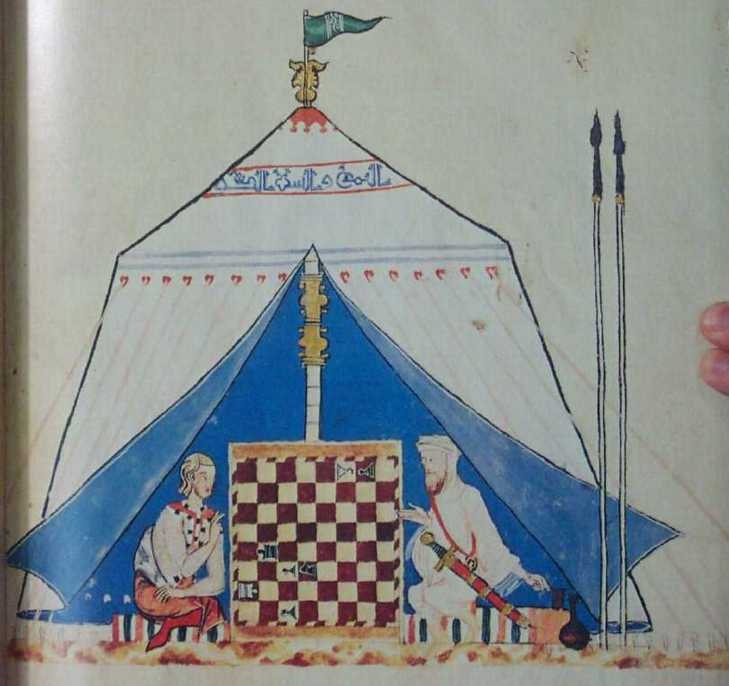
By the later Middle Ages, chess was already popular among the nobility and educated classes across much of Europe. It was played at courts, mentioned in literature, and sometimes even used as a metaphor for politics and war.
The Birth of Modern Chess
The most dramatic transformation of the game happened in the late 15th century, primarily in Spain and Italy. In a relatively short period the rules changed in ways that made chess far more dynamic.
The most important change concerned the queen. Previously a weak piece that moved only one square at a time, she was suddenly given the combined powers of the rook and bishop — the ability to move any number of squares in any direction. The bishop was also freed to move any number of squares along its diagonals instead of the limited jump it had before.
These changes completely altered the character of the game. Attacks became faster, games shorter, and tactical possibilities far richer. The new rules spread rapidly across Europe and within a few decades had become the standard. Historians sometimes call this the era of the "mad queen," reflecting how suddenly powerful the piece had become.
Castling and the modern rules of pawn promotion also settled into something close to their present form around this time.
The 19th Century and the First Tournaments
In the 1800s chess began to organize itself. The first major international tournament was held in London in 1851, won by Adolf Anderssen. It was an important moment: for the first time strong players from different countries competed under the same conditions.
Still, there was no official world champion. The strongest players of the era — Anderssen, Morphy, Steinitz — were recognized by reputation rather than by any formal title.
The First Official World Championship
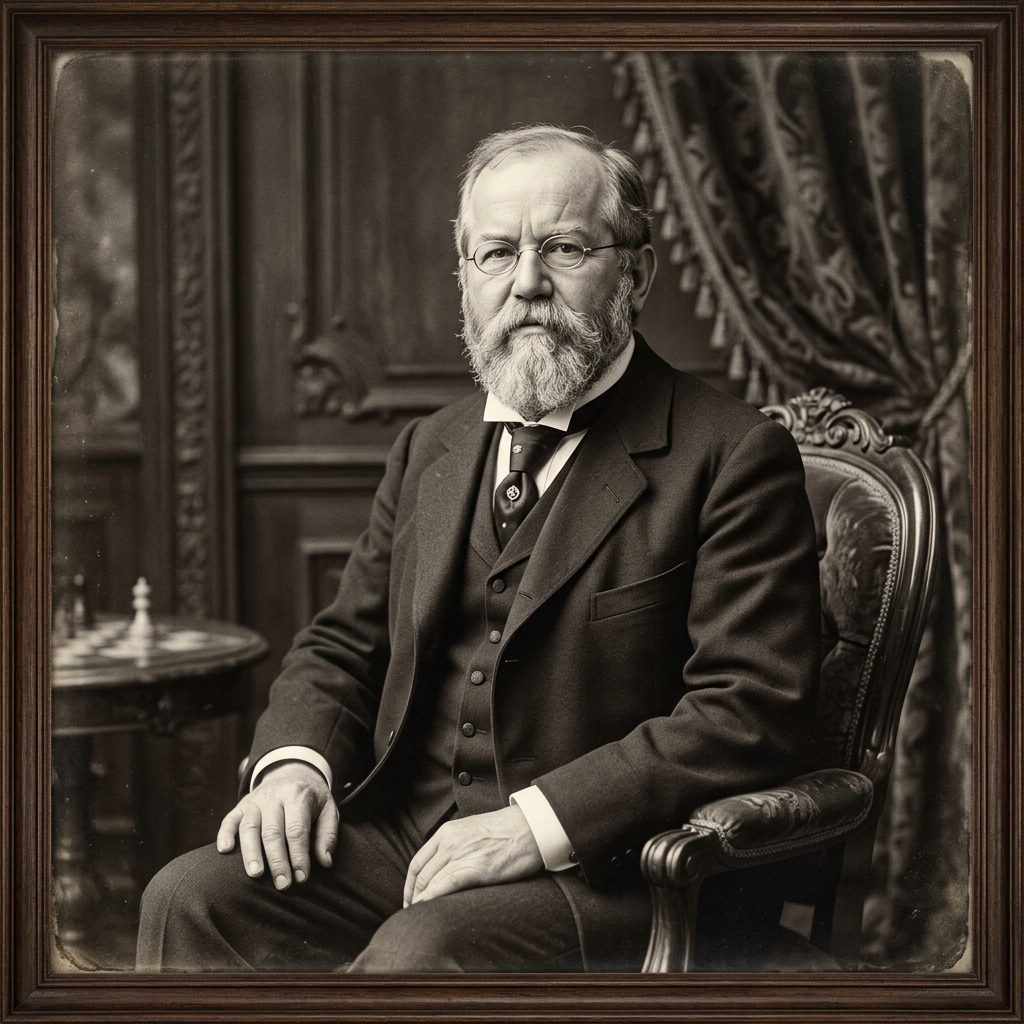
That changed in 1886. Wilhelm Steinitz and Johannes Zukertort played a match across New York, St. Louis, and New Orleans to decide the first official World Champion. Zukertort started strongly, but Steinitz recovered and won the match 10–5. From that point the title of World Champion became a formal and recognized position.
The Classical Period
The decades that followed produced some of the greatest names in chess history. Emanuel Lasker held the world title for an extraordinary 27 years (1894–1921), longer than any other player. José Raúl Capablanca of Cuba was famous for his almost effortless positional style and remarkable endgame technique. Alexander Alekhine, the first Russian-born world champion, brought a more dynamic and aggressive approach.
This period also saw chess theory deepen significantly. Players began preparing openings more systematically, and the idea of the game as a serious intellectual discipline took stronger hold.
The Soviet Era
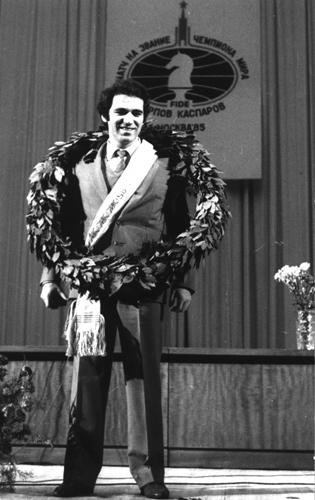
After the Second World War, the Soviet Union made chess a matter of national prestige. The state supported the game heavily through schools, clubs, and professional training. For decades almost every World Champion came from the USSR or its sphere of influence: Mikhail Botvinnik, Vasily Smyslov, Mikhail Tal, Tigran Petrosian, Boris Spassky, Anatoly Karpov, and Garry Kasparov.
,_Bestanddeelnr_934-2551.jpg)
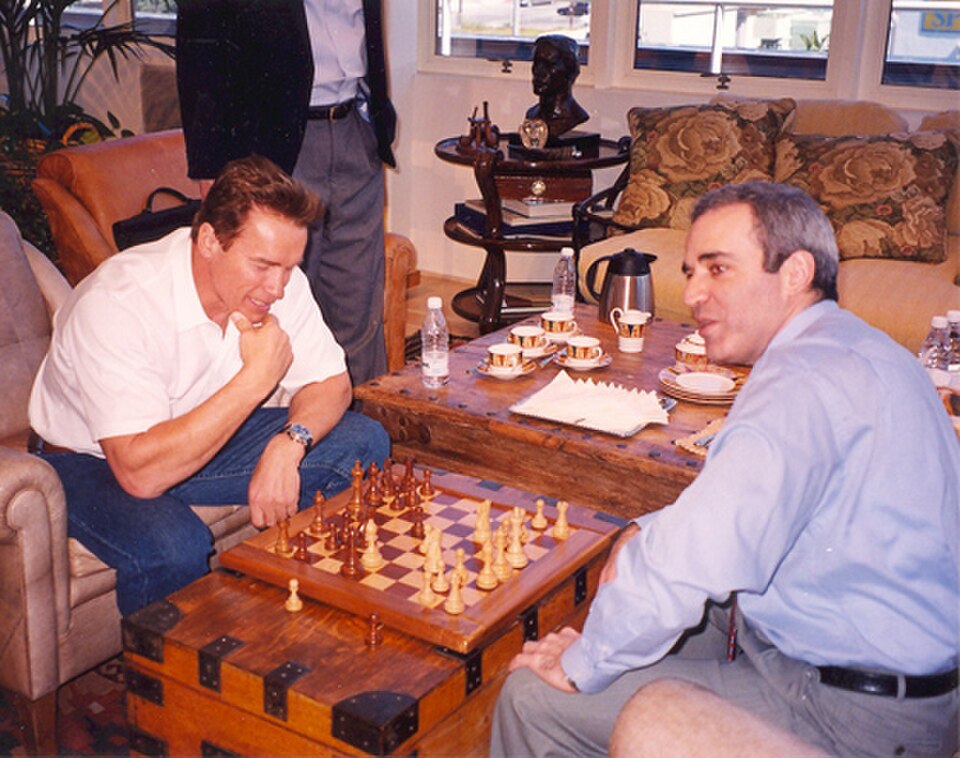
The long rivalry between Karpov and Kasparov in the 1980s remains one of the most intense in the history of the game. Their matches were not only contests of extraordinary skill but also political and psychological dramas played out on the world stage.
Mikhail Tal: The Magician from Riga
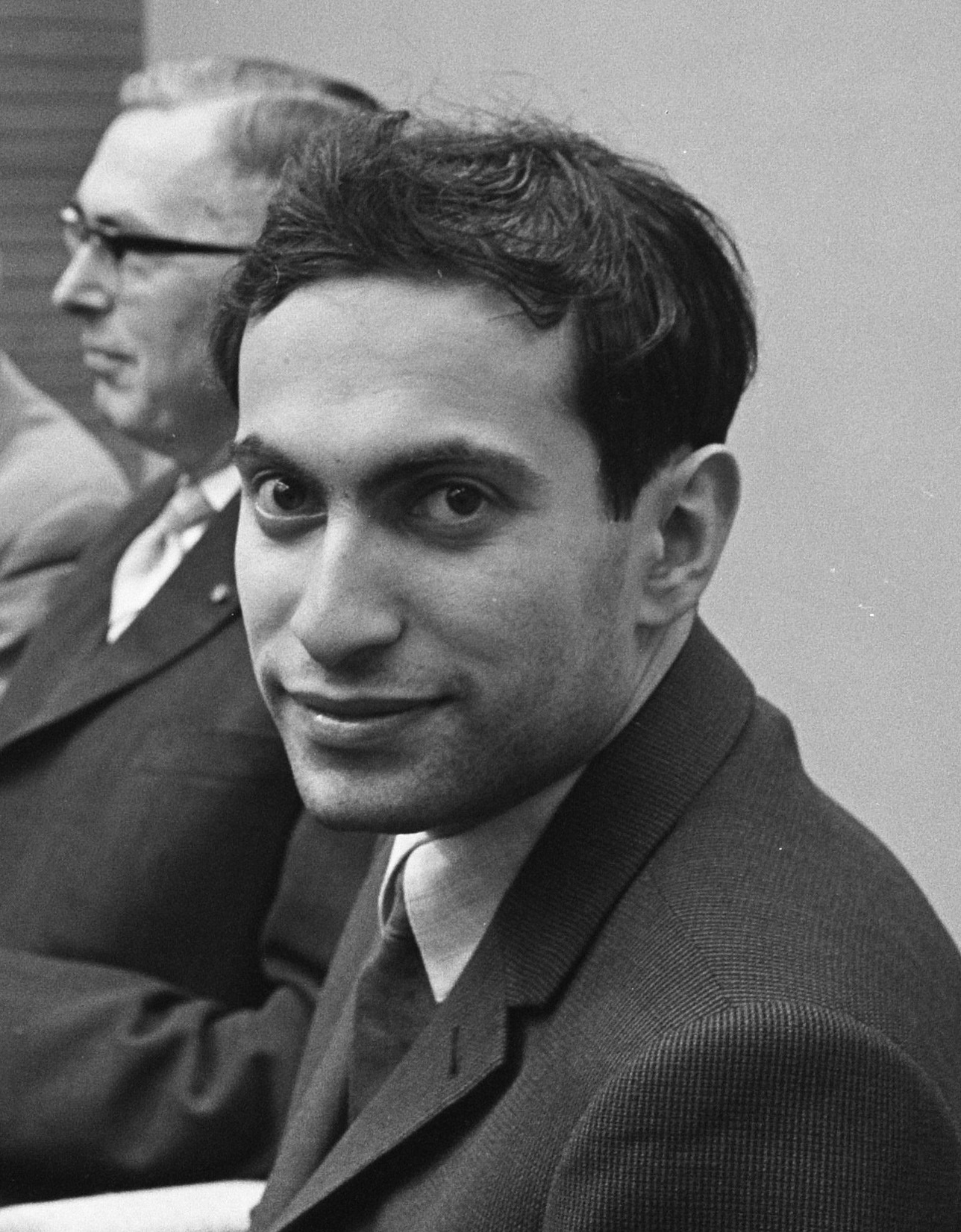
Among the Soviet grandmasters, Mikhail Tal held a unique place in the hearts of chess fans. Known as "The Magician from Riga," Tal became the 8th World Champion in 1960 at age 23. His style was unlike anyone else's — hyper-aggressive, intuitive, and relentlessly attacking. Tal was famous for sacrificing pieces not based on clear, calculated variations, but to create overwhelming tactical complexity and psychological pressure that bewildered even the strongest defenders.
_gegen_Fischer_(USA).jpg)
_en_Tal,_Bestanddeelnr_934-3788.jpg)
Even after the Soviet Union collapsed, many of the strongest players continued to come from the countries that had once belonged to it.
The Modern Era
One of the most famous moments in chess history came in 1972, when Bobby Fischer defeated Boris Spassky in Reykjavik. The match became far more than a sporting event. In the middle of the Cold War it was widely seen as a symbolic confrontation between the United States and the Soviet Union. Fischer's victory made chess suddenly visible to a much wider public.


,_Bestanddeelnr_924-7362.jpg)
The Fischer Clock: Revolutionizing Time Control
Beyond his classic over-the-board victories, Bobby Fischer fundamentally changed how competitive chess is played by inventing a new timing mechanism. In 1988, Fischer filed U.S. Patent 4,884,255 for a digital chess clock that added a fixed amount of extra time (an increment or bonus) to a player's remaining time for every move completed.
Prior to this invention, games under traditional time controls often descended into chaotic "time scrambles" where players were forced to make lightning-fast moves to avoid forfeiting on time, regardless of how superior their position was. Fischer's increment system ensured that a player with a winning position would always have enough time to convert their advantage. First featured prominently in the 1992 Fischer–Spassky rematch, the "Fischer increment" was subsequently adopted by FIDE and has become the universal gold standard in modern tournaments and online chess platforms worldwide.
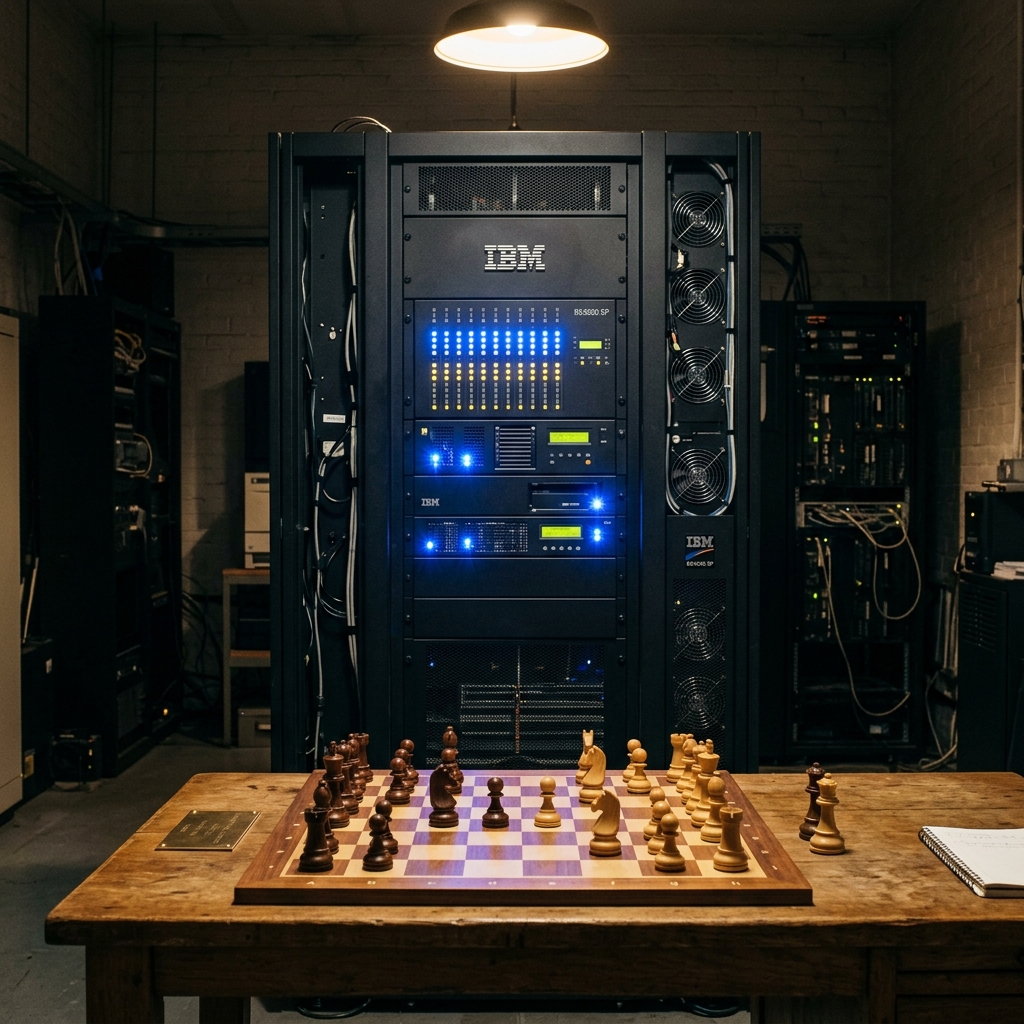
A quarter of a century later, in 1997, IBM's computer Deep Blue defeated Garry Kasparov in a match. It was the first time a machine had beaten the reigning world champion under match conditions. That moment marked the beginning of the engine era. Since then, computers have transformed preparation, analysis, and even the way the game is understood.
In more recent years, online platforms have brought millions of new players to chess. Chess.com has grown into the largest chess site in the world, while Lichess has become widely popular for being free and open-source. Both have played a major role in making the game more accessible than at any previous point in its history.
The Bishop Across Cultures
One of the most interesting things about chess is how the names of the pieces changed as the game moved between cultures. The bishop is the best example.
Originally the piece represented an elephant. Some languages still keep that meaning:
- Russian: Slon (elephant)
- Spanish: Alfil
- Arabic: Al-Fil
In other languages the name shifted toward the piece's movement. German calls it Läufer (runner), Polish calls it Goniec (messenger), and several Scandinavian languages use similar words for "runner."
A third group of languages went in a completely different direction. In French the bishop is called Fou (fool or jester). Romanian followed this path and calls it Nebun (madman). This likely happened because the shape of the piece was reinterpreted as a jester's hat.
Other languages saw the bishop as a military figure — an archer, a hunter, or an officer. And in English it became a Bishop, almost certainly because the top of the piece resembled a bishop's mitre.
It is remarkable how one piece ended up with so many different identities depending on where chess traveled.
Conclusion
Chess has lasted so long because it offers something rare: a pure contest of minds with almost no element of chance. It has survived the rise and fall of empires, the invention of the printing press, the computer, and the internet, and it continues to evolve.
Whether someone is playing their first game or studying deep theory with modern engines, they are taking part in a tradition that has connected people across centuries and cultures. The game keeps moving forward, and there is still plenty of story left to write.